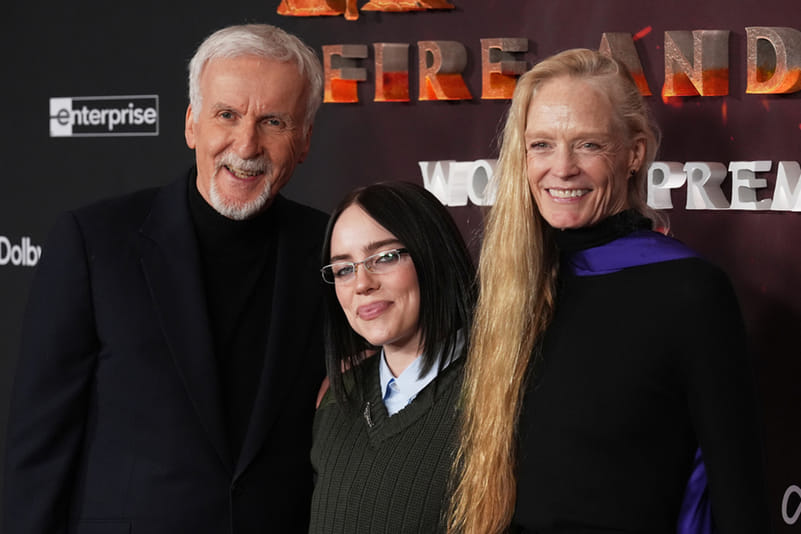
The red carpet at the Odeon Luxe Leicester Square wasn’t just red—it was electric. Billie Eilish, draped in avant-garde elegance, stepped into the London night alongside none other than James Cameron, the visionary behind Titanic and Avatar. The occasion? The world premiere of Billie Eilish: The World’s a Little Blurry, not as a traditional documentary, but now reimagined as a concert film experience. The fusion of indie pop and cinematic mastery created a cultural moment that blurred the lines between music, storytelling, and spectacle.
A Premiere Like No Other: Music Meets Blockbuster Vision
This wasn’t your average artist-led premiere. The presence of James Cameron—rarely seen at pop music events—signaled a shift in how concert films are being perceived: not as archival footage, but as full-fledged cinematic art. Cameron’s involvement, though not as director (that honor belongs to R.J. Cutler), stems from Apple’s collaboration with Lightstorm Entertainment to remaster and reframe the original documentary into a large-format, immersive concert cut.
The re-edited version amplifies live performance sequences with Dolby Atmos soundscapes and IMAX-grade visuals, turning intimate moments—like Billie’s raw acoustic take on “Your Power”—into emotionally charged cinematic vignettes. Cameron’s team applied post-production techniques typically reserved for sci-fi epics: dynamic lighting enhancements, spatial audio mixing, and subtle visual layering to heighten audience immersion without distorting the documentary’s authenticity.
“We didn’t want to make it feel like a concert with a story around it. We wanted the story to become the concert,” said a post-production supervisor involved in the remastering process.
Fans in attendance reported goosebumps during the “Bury a Friend” sequence, where the pulsing bassline and glitch-heavy visuals mirrored the claustrophobic intensity of Aliens—a nod, perhaps, to Cameron’s influence on the film’s darker tonal shifts.
Billie’s Red Carpet Statement: Fashion as Narrative
If the film blends music and cinema, Billie’s red carpet look fused rebellion and refinement. She wore a custom, deconstructed tuxedo by Harris Reed—satin lapels askew, one sleeve missing, pants cropped unevenly—paired with lime-green platform boots. Her hair, a mix of black and coral, framed a face free of heavy makeup, echoing the documentary’s theme of unfiltered self-expression.
This wasn’t just fashion. It was continuity. In the film, Billie discusses rejecting industry pressure to “look the part.” By stepping onto the carpet in something that defied categorization—neither fully masculine nor feminine, neither formal nor punk—she embodied the film’s central message: authenticity over approval.
Contrast this with typical pop star red carpet strategies—structured gowns, choreographed smiles, brand-heavy ensembles—and Billie’s choice becomes a quiet act of resistance. Stylist Samantha Burkhart confirmed the look was intentional: > “We wanted her to arrive as the same person who wrote ‘Idontwannabeyouanymore’—vulnerable, bold, and completely unedited.”
Why James Cameron’s Presence Matters
Seeing James Cameron beside Billie Eilish might seem incongruous at first. One built empires with CGI armies; the other sings whisper-soft lyrics about depression and fame. But their collaboration reveals a larger trend: the convergence of music documentaries and high-end film technology.
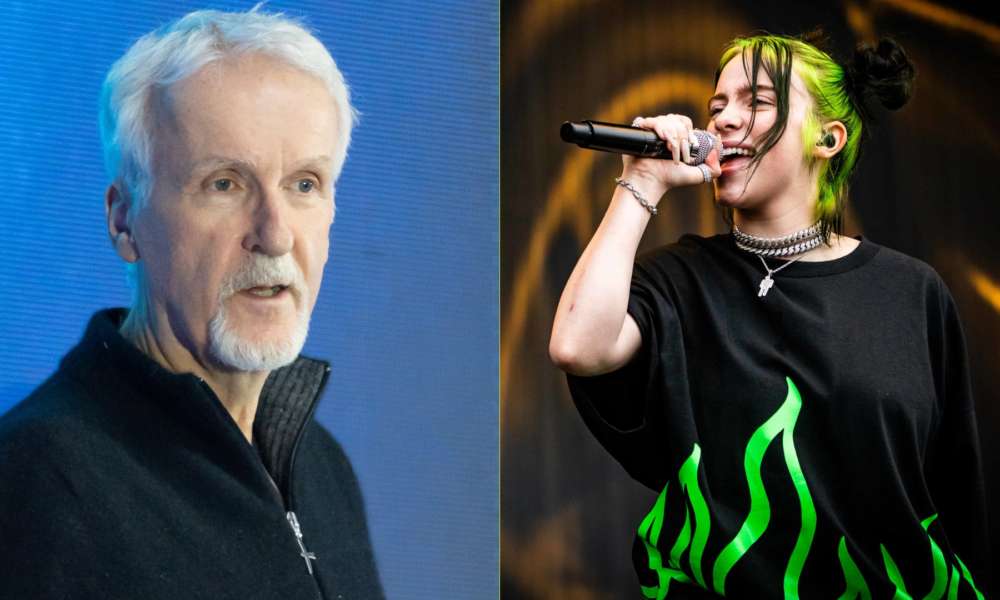
Cameron’s role wasn’t ceremonial. He advocated for the film’s theatrical re-release after privately screening the original cut. “I saw the emotional arc, the tension, the intimacy,” Cameron told Variety at the premiere. “It had the pacing of a thriller and the heart of a coming-of-age odyssey. It deserved more than a streaming drop.”
His involvement unlocked resources—soundstage access, post-audio engineers from his Avatar team, and distribution leverage through Disney-owned theatrical networks. The result? A hybrid release: limited IMAX screenings followed by an Apple TV+ global launch.
This model could redefine how music documentaries are produced. No longer just “bonus content” for superfans, they’re becoming event cinema. Taylor Swift’s The Eras Tour concert film proved the model’s commercial viability; Billie’s premiere, with Cameron’s stamp, proves its artistic legitimacy.
Behind the Scenes: How the Concert Cut Was Made
Transforming The World’s a Little Blurry—a 2021 documentary following Billie from age 17 to 19—into a concert-focused narrative required surgical editing. The original film runs 110 minutes and weaves personal footage (family moments, therapy sessions, studio work) with live performances.
The concert cut, clocking in at 88 minutes, inverts that ratio. Live performances now make up 65% of runtime. Here’s how the edit team did it:
- Audio Enhancement: Live tracks were remixed using multitrack recordings from actual shows. Background noise was stripped, harmonies isolated, and reverb adjusted to simulate front-row acoustics.
- Visual Reframing: Drone footage and 360° camera angles were reprocessed to mimic IMAX aspect ratios. Close-ups were stabilized and color-graded for maximum emotional impact.
- Narrative Compression: Personal scenes were reduced to brief interludes—e.g., a 10-second clip of Billie crying after a panic attack now leads directly into “Everything I Wanted,” intensifying the emotional pivot.
One limitation emerged: not all concerts had full multi-cam coverage. For smaller gigs, the team used AI-assisted interpolation to generate missing angles—carefully avoiding the “uncanny valley” by limiting motion to crowd pans and lighting shifts.
Audience Reaction: Who Is This Film For?
At the premiere, the crowd was split—half devoted fans clutching handmade signs, the other half older cinephiles drawn by Cameron’s name. Post-screening reactions reflected that duality.
Younger viewers praised the amplified concert sequences: > “It felt like I was right there at Glastonbury. The bass hit my chest,” said 19-year-old attendee Mia Tran.
Cinema enthusiasts appreciated the technical craft: > “The way they used light and silence—especially before ‘Happier Than Ever’—was Hitchcockian,” noted film critic Daniel Foresight.
But not everyone was convinced. Some fans of the original documentary missed the deeper personal insights. One Reddit user wrote: > “They cut out the part where she talks about body image with her mom. That hit harder than any concert moment.”
This tension highlights a key challenge: balancing spectacle with intimacy. The concert cut succeeds as an audiovisual experience but risks diluting the documentary’s raw humanity.
The Future of Music Documentaries
Billie’s premiere marks a turning point. With streaming oversaturated with artist content, the next frontier is elevated access—not just more footage, but better, more immersive experiences.
What’s coming next?
- VR Integration: Apple is reportedly testing a VR companion app for the film, allowing users to “stand” in the audience during select songs.
- Hybrid Releases: More artists may adopt the limited theatrical + streaming model to boost cultural buzz.
- Director Collaborations: Expect more cross-genre partnerships—e.g., Greta Gerwig directing a Lorde visual album or Spike Jonze working with Kendrick Lamar.
The message is clear: music documentaries are no longer side projects. They’re becoming flagship cultural artifacts, deserving of the same production value as Oscar contenders.
Practical Takeaways for Artists and Creators
If you’re creating music content—or just consuming it more thoughtfully—here’s what this moment teaches:
- Authenticity Scales: Billie’s unfiltered persona works because it’s amplified by high production. Raw emotion + polished delivery = mass resonance.
- Collaboration Breeds Innovation: Cameron didn’t “take over” the project. He elevated it by applying film expertise where it counted—sound, pacing, visual depth.
- Repackaging Has Value: Re-releasing content isn’t lazy—it’s strategic. A concert cut can introduce a documentary to new audiences.
- Fashion Is Part of the Narrative: On the red carpet and beyond, visual choices reinforce message. Every detail communicates.
A New Standard for Concert Films
Billie Eilish didn’t just premiere a movie in London—she redefined what a music documentary can be. With James Cameron’s cinematic rigor and her own uncompromising artistry, they’ve created a hybrid: part memoir, part sensory storm.
This isn’t just about fame or fashion. It’s about control. Billie, at 22, dictated the narrative—from the film’s content to her red carpet presence. Cameron’s involvement didn’t overshadow her; it spotlighted her vision with blockbuster-grade tools.
For fans, creators, and filmmakers, the takeaway is urgent: the age of passive music content is over. The future belongs to those who merge truth with spectacle, vulnerability with velocity.
Attend a screening. Listen in IMAX if you can. And watch closely—because this might be the blueprint for the next decade of music storytelling.
FAQ
Why was James Cameron at Billie Eilish’s concert film premiere? James Cameron supported the remastered release through his company, Lightstorm Entertainment, which partnered with Apple to enhance the film’s audiovisual quality for theatrical screening.
Is the concert film different from the original documentary? Yes. The concert cut focuses more on live performances, runs shorter (88 minutes), and features IMAX-optimized visuals and remixed sound, while reducing personal narrative segments.
Where was the premiere held? The world premiere took place at Odeon Luxe Leicester Square in London, a historic theater known for major film debuts.
Who directed the original Billie Eilish documentary? R.J. Cutler directed Billie Eilish: The World’s a Little Blurry. The concert re-release was co-supervised by Cutler and post-production leads from Lightstorm.
Can I watch the concert version on Apple TV+? Yes. After a limited theatrical run, the concert cut became available globally on Apple TV+.
Did Billie Eilish perform live at the premiere? No live performance occurred, but the screening included a surprise post-credits acoustic snippet filmed backstage at a 2023 show.
What was Billie Eilish wearing on the red carpet? She wore a custom deconstructed tuxedo by Harris Reed with asymmetrical details, paired with neon green platform boots and natural makeup.
FAQ
What should you look for in Billie Eilish Stuns London Red Carpet with James Cameron? Focus on relevance, practical value, and how well the solution matches real user intent.
Is Billie Eilish Stuns London Red Carpet with James Cameron suitable for beginners? That depends on the workflow, but a clear step-by-step approach usually makes it easier to start.
How do you compare options around Billie Eilish Stuns London Red Carpet with James Cameron? Compare features, trust signals, limitations, pricing, and ease of implementation.
What mistakes should you avoid? Avoid generic choices, weak validation, and decisions based only on marketing claims.
What is the next best step? Shortlist the most relevant options, validate them quickly, and refine from real-world results.